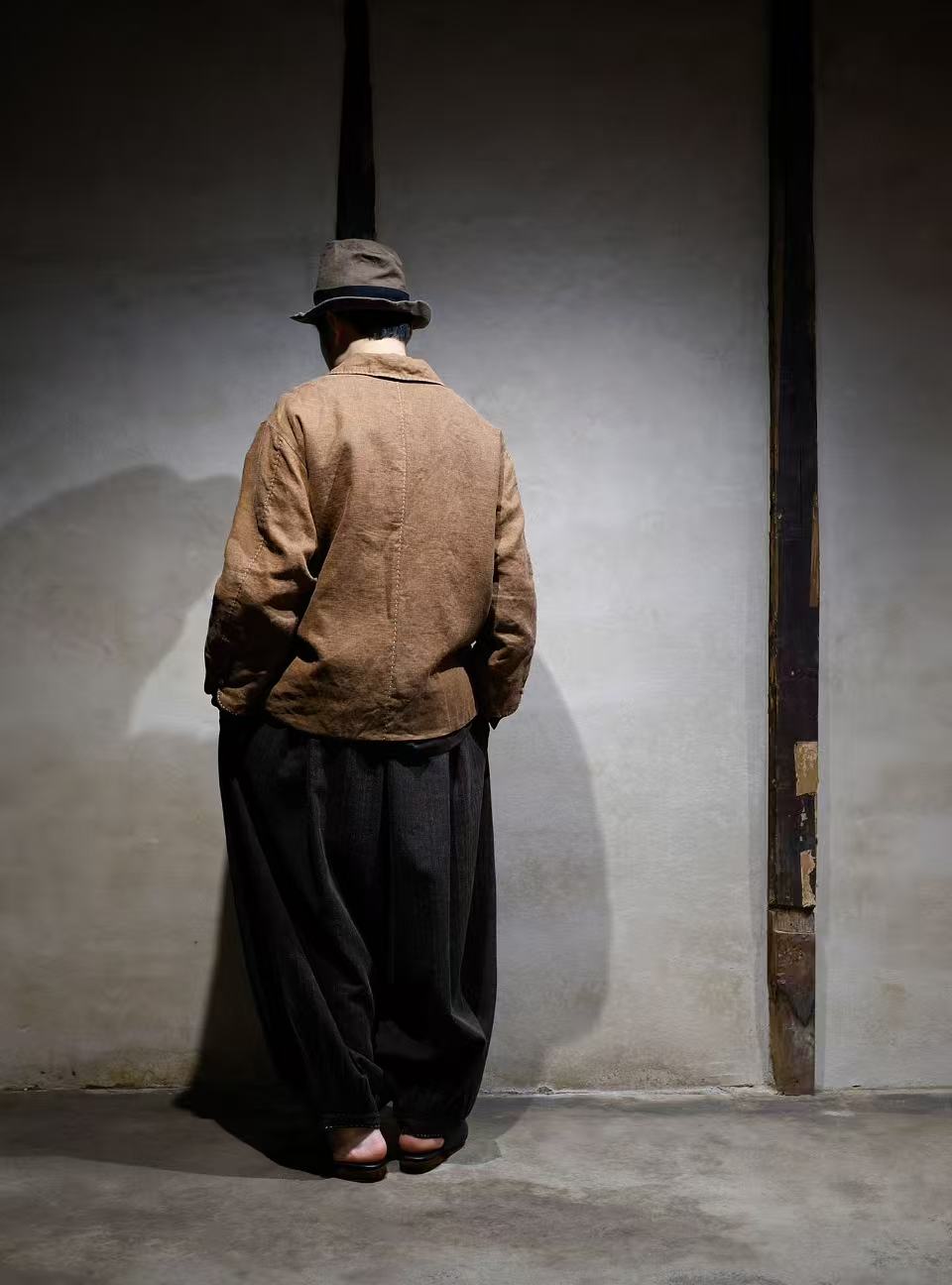
キルトジャケット
キルトジャケット
Couldn't load pickup availability
Hunger ren|Quilt jacket
Size: F
Material: 100% Linen (Wool padding)
Color: Dioscorea Cirrhosa (Mud & Dioscorea Cirrhosa Dye)
Measurement
Shoulder: 49cm
Bust: 120cm
Length: 73cm
Sleeve: 55cm
Model: 175cm, 68kg
This is a custom Xiangyunsha (gambiered Canton gauze) by designer Hunger Ren. It is made of 100% linen material, finished with the same traditional dyeing techniques as traditional Xiangyunsha at a long-established workshop in Guangdong Province, China. For this product, the "dioscorea cirrhosa" side, which is the back of the fabric, is used. The front side is treated with traditional mud dyeing, and as the mud partially seeps into the dioscorea cirrhosa color on the back during the dyeing process, a unique mottled pattern called "toryo" (permeated dioscorea cirrhosa) is created. This natural color bleed is a testament to genuine Xiangyunsha, combining the breathability inherent to linen with the supple feel of mud dyeing, making it a special specification.
The lining features a luxurious specification with 100% wool quilting.It maintains excellent insulation while being lighter than conventional cotton materials.
・Xiangyunsha (Gambiered Canton Gauze)
A traditional luxury silk fabric born in Guangdong Province, China.
Originating in the Ming Dynasty (14th-17th centuries), it was favored by the upper classes from the Qing Dynasty to the Republican era. This unique fabric is made by weaving high-quality raw silk, then finishing it with a traditional dyeing technique called "dioscorea cirrhosa dyeing." First, it is repeatedly dyed with natural dyes extracted from dioscorea cirrhosa roots, then river mud from the "Pearl River" basin is applied, creating deep colors and a unique luster through a chemical reaction between iron and tannic acid. Through this complex dyeing process, a supple, durable fabric is created that gains character over time. Due to its rarity and traditional manufacturing methods, it is still protected as an important intangible cultural heritage.
For the price and details of this product (size, other images, purchase, etc.), please contact us via Contact.
シェア